
How to actually go gluten-free (without living in the free-from aisle)
What to eat, what to watch for, how long to give it and what to do if you feel no different
If you’ve arrived here, you’ve either just finished the first article in this series and decided you’re going to give this a proper go, or you’ve already tried and felt no different and are wondering whether the whole thing was worth the effort. Either way, welcome. This is the piece that fills in all the practical detail the first article deliberately left out.
By the end you’ll know exactly what actually counts as gluten (including the ones almost everyone misses), why the ‘free-from’ aisle isn’t the answer, how to build meals around real food without feeling deprived, how long you need to give this before drawing any conclusions and what to look at if you’ve genuinely done all of that and still feel awful. No white knuckles required!
Not sure why you’re doing this in the first place?
If you’re feeling wobbly about the commitment, or you’re not quite convinced this is worth your energy, hop over to Article 1: Do I really need to cut out gluten? first. It covers the mechanism, the science and the specific autoimmune conditions where gluten deserves particular attention, plus the NICE guidelines that a lot of people have never been told about. This piece is written for the person who's already decided… or nearly.
The bit where it gets frustrating
There is a stretch of the gluten-free journey that almost everyone hits and it usually turns up somewhere between week three and week six. You’ve cleared out the bread, you’ve made peace with the fact that you can’t just grab a sandwich at lunch, you’ve done the awkward dance in restaurants and had the conversation with your mother-in-law about her legendary chicken pie…and still, you don’t feel any different. Or, if you’re really unlucky, you may feel a bit worse.
Many people at this point conclude that gluten wasn’t the problem and put the toast firmly back on the menu. It’s totally understandable, but in most cases it’s also a little premature. There’s usually a very good reason nothing has changed …yet. It’s more often that the elimination wasn’t complete, wasn’t long enough or was replaced with foods that were causing their own issues underneath.
Which brings me to two clients I want to tell you about.
Two people, two very different problems
The first person came to me at the six week mark, on the verge of giving up. She’d removed gluten, felt no meaningful change and was ready to write the whole thing off. When we looked more carefully at what she was actually eating, several things were going on. Firstly, six weeks is too short a window for immune resolution (more on that shortly). Her breakfast was gluten-free toast with jam. Her lunch was often a shop-bought gluten-free sandwich. Her evening snack was gluten-free crackers with cheese and crisps. She had swapped one set of processed foods for another and the underlying inflammation was still smouldering on.
The second was a client who had been strict for months, felt significantly better, but was hitting periodic flares she couldn’t explain. When we went through her food diary line by line, there it was… soy sauce. Standard soy sauce contains wheat! She was making the odd stir fry and having occasional sushi and dressing it with soy sauce; so was inadvertently reintroducing gluten in generous weekly doses without realising. We swapped it for tamari (which is naturally gluten-free) and the flares settled down.
Both women were doing what they thought was the right thing, but were also missing a piece of the puzzle. The rest of this article is about those pieces most people don’t know they’re missing.
So what actually counts as gluten?
Gluten lives in wheat, barley, rye and their many aliases. That last bit can trip a lot of people up, because wheat has sooo many different names: spelt, kamut, einkorn, emmer, farro, freekeh, semolina, durum, bulgur, couscous, triticale. All wheat. All gluten. It doesn’t matter how ‘artisan’ the bakery, how ancient the grain or how much the loaf cost. If it’s a member of the wheat family, it counts, sorry.
Oats are a separate conversation. Naturally they don’t contain gluten, but they’re very often contaminated during processing, so if you’re going gluten-free you need to buy certified gluten-free oats. A subset of people with autoimmune conditions can also react to a protein in oats called avenin regardless of contamination or not, so if you’ve been strict for a while and included plenty of oats and still feel a bit off, oats are worth trialling taking out too or use a proper IgG food panel to double check.
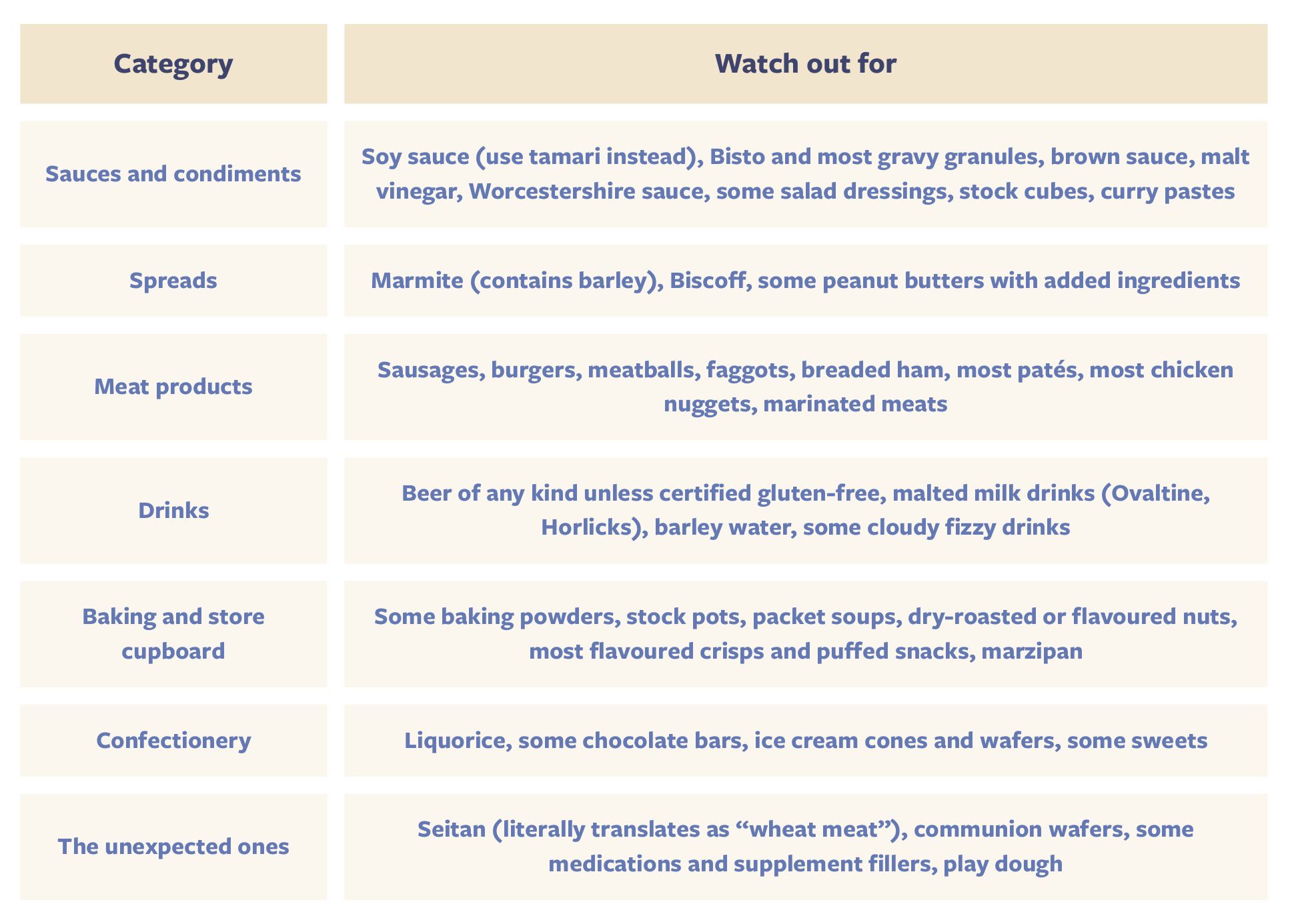
The foods that usually catch my clients out are the ones they never even thought to check. This is where many well-intentioned gluten-free attempts can go awry.
Where gluten is hiding (the categories we often miss)
If you have coeliac disease, cross-contamination in the kitchen is also essential to consider. Separate chopping boards, a fresh butter pot to avoid crumb transfer and a proper clean of the toaster (or a second toaster if you share the kitchen) are worth the effort. If you’re not coeliac you can be more relaxed about that particular area.
The great ‘free-from’ aisle trap
When you first go gluten-free, the ‘free-from’ aisle looks like your answer. Bread, cakes, pasta, biscuits, crackers, all labelled ‘safe’...hurrah… It feels like you can carry on more or less as normal. But let’s not jump in quite so fast.
Ultra-processed gluten-free products are typically built to imitate the texture of the wheat versions, which means the manufacturers reach for a whole host of additives that most of us wouldn’t recognise as food. Emulsifiers like carboxymethylcellulose (CMC) and polysorbate 80; gums, refined starches, industrial oils, sugars and flavourings. A recent comprehensive review pulled together the growing evidence that these food additives affect the gut microbiome, thin the mucus layer that protects your gut lining and also drive low-grade inflammation (not something that anyone with autoimmunity wants to be triggering). [1] A randomised study of the emulsifier CMC in humans, found measurable changes in the gut microbiota and metabolome after just 11 days of exposure… crazy right, just 11 days to disrupt your whole gut ecology! [2] A gentle reminder to keep reading those ingredient lists and sadly the ones in the ‘free from’ aisle are often the longest.
You can remove gluten entirely, replace it with things from the ‘free-from’ aisle and inadvertently still be driving the very inflammation and gut permeability you were trying to reduce, through a different route entirely. Your body would rather you didn't do this to it.
I’m not saying never eat a shop-bought gluten-free biscuit (gluten-free pasta certainly has a valuable place in my kitchen). I’m saying the ‘free-from’ aisle is a bridge, not a destination. Use it while you’re finding your feet. Buy the odd loaf and the occasional pack of crackers to make life easier at first. The goal is to steadily crowd those items out with real whole food, because real food is where the actual reset happens.

Crowding gluten out with real food
Going gluten-free is really about what you’re bringing in, not just what you’re taking out.
The best gluten-free diet is one where you’re eating so much good real food that gluten barely gets a look in.
Which brings me to a very British problem. Our national diet can be… let's be honest… quite beige. Everything is encased in pastry, dredged in flour, coated with crumbs, battered, wrapped in bread or served on a bap. Pies, pasties, sausage rolls, sandwiches, toast, crackers, biscuits, cakes, scones, Yorkshire puddings, onion rings, gravy from a granule, dinner served with a slice of bread on the side for good measure...I could go on.
When you decide to go gluten-free in that food environment it can feel really daunting, as though the entire high street has just been closed to you. The trick is to change the shape of your meals, not just remove the wheat and hope for the best. Think of it as a real opportunity to give your whole approach to food an overhaul. Bring in colour, bring in variety, get back into the kitchen and rediscover what real unprocessed food tastes like. If you focus on this, you might find you barely notice gluten’s absence at all.
Here’s some simple starter tips:
Going gluten-free checklist
Use the free-from aisle as a bridge, not a habit. It’s fine to buy a loaf of gluten-free bread, a pack of crackers or some pasta for the first few weeks while you find your feet. The goal is to steadily crowd those items out with real food, not to build your entire diet around them.
Get back in the kitchen. The more you cook for yourself, the more control you have over what’s in your food and the more certain you can be that you’re 100% gluten-free. Takeaways are a minefield of hidden gluten (marinades, sauces, cross-contamination in the fryer) and a costly one at that.
Start with three or four simple gluten-free recipes that you really enjoy. Rotate them through the week. Once those feel easy, add another two or three. You don't need to become a gluten-free chef overnight.
Focus on adding, not just removing. Aim for as much colour and variety on your plate as possible. Eating 30 different plants a week is one of the strongest levers you have for gut and immune health (this five-a-day piece goes into why).
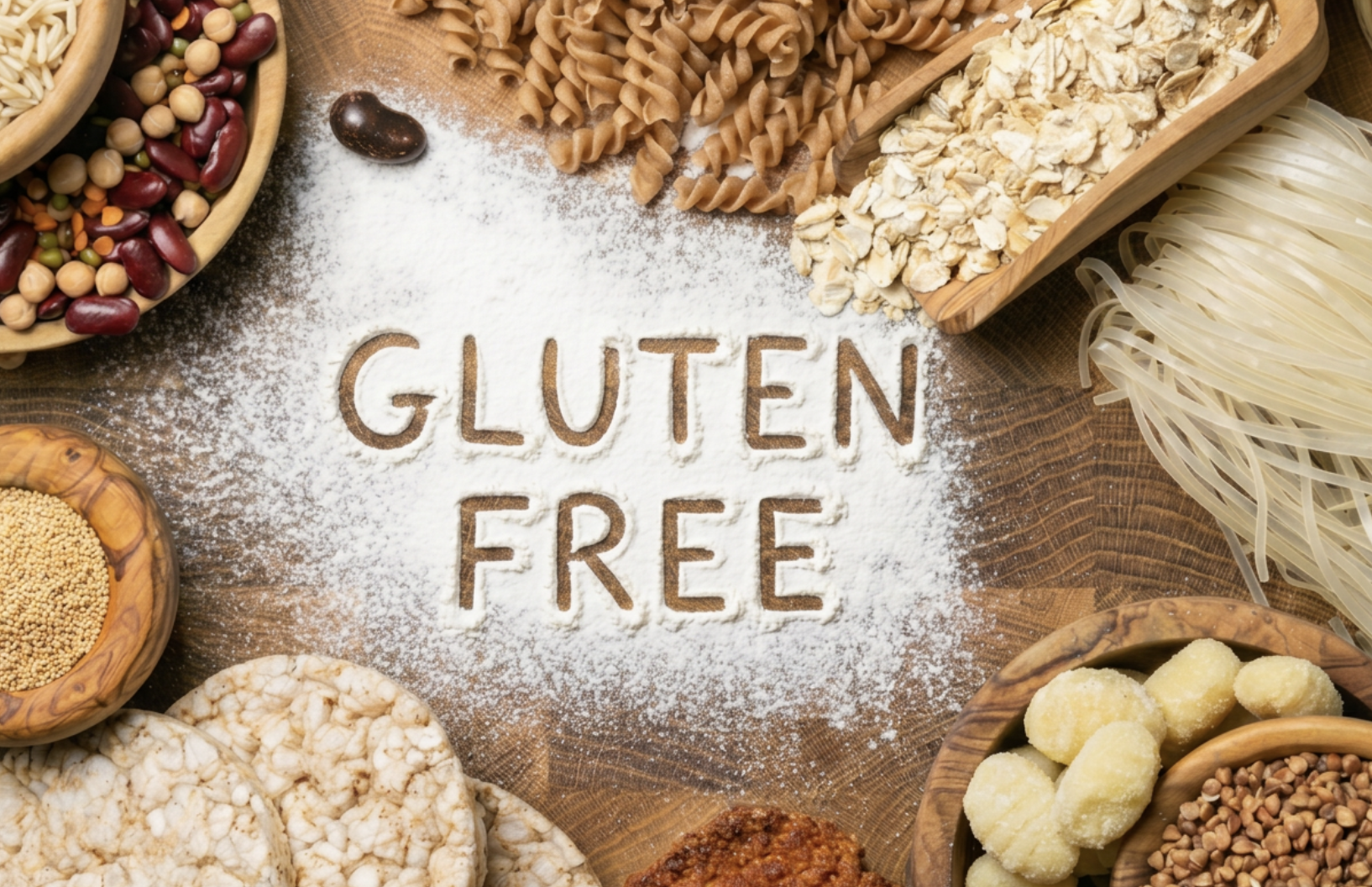
Rebuild your meals around what’s naturally gluten-free rather than trying to recreate the wheat versions. Eggs, meat, fish, pulses, vegetables, rice, buckwheat, quinoa, oats (certified), fruit, nuts and seeds. This is real food, not a compromise.
The bit no one warns you about
For many people, the hardest part isn’t giving up bread, it’s navigating everyone else’s opinions and reactions.
Family members who insist “one slice won’t hurt”. Friends who tell you you’re being “picky”. The awkwardness of asking questions in restaurants or turning down homemade cake that someone has made especially for you.
If this feels uncomfortable, you’re not alone. The good news is that it really does get easier. The people around you quickly get used to it and before long it simply becomes part of how you eat, rather than the centre of every conversation.
Remember, this isn’t about being awkward or obsessive. You’re simply giving your body the best opportunity to heal and learning how it responds.
A few things that can make life easier:
Let people know in advance rather than apologising at the table.
If you’re heading to a family gathering, offer to bring a dish that you know you can enjoy alongside everyone else.
When eating out, have a quick look at the menu beforehand or phone ahead if you’re unsure. Most restaurants are far more accommodating than you might expect.
Some practical starting points:
Breakfasts built around eggs (omelettes, shakshuka, scrambled with smoked salmon), overnight oats with certified gluten-free oats, buckwheat pancakes with berries or Greek yoghurt with fruit and nuts. Toast is not a moral necessity, try thinly sliced and grilled sweet potatoes as an alternative base for your avo and eggs.
Lunches that don’t need bread. Big salads with a proper protein source (beans, lentils, fish, chicken). Leftover roast. Soup with a couple of oatcakes on the side. Buddha bowls with rice, roasted veg and chickpeas. If you must have a wrap, corn tortillas do a decent job, seaweed ones are also a nice alternative.
Dinners are almost always an easy meal. Curry and rice. Roast dinner with potatoes and gluten-free gravy. Chilli. Cottage or shepherd's pie with a mash top. Salmon and roasted veg. Stir fry with tamari and rice noodles. Bolognese with lentil pasta. Vast swathes of British and world cooking are naturally gluten-free once you take the pastry, the bread and the wheat sauce out of the equation.
Snacks: oatcakes, hummus and crudités, boiled eggs, olives, nuts, fruit, dark chocolate, cheese. All naturally gluten-free.
So, bread, because I know that’s the one you’re really wondering about. Bread is genuinely difficult to replace and I’m not going to pretend otherwise. Most shop-bought gluten-free bread is the ultra-processed stuff we’ve just talked about. One of my favourite recipes for a homemade gluten-free loaf that actually tastes good and doesn’t feel like a compromise is this one from Ela Vegan. I also like the seeded slices by Dillon Organic, not really a bread in the traditional sense, but loaded with fibre and a nice option.
While we’re on the subject of crowding good food in, this is a helpful moment to remind you that eating 30+ different plants a week is one of the strongest levers you have for gut and immune health. If you haven't read it, my five-a-day piece goes into why. Autoimmune conditions and gut health are inseparable, and diet diversity is one of the few things that meaningfully shifts the microbiome.
How long and how strict?

This is the million dollar question and my answer may surprise you. Six weeks is not enough. Three months may not be enough either.
Anti-gliadin antibodies (the immune markers your body produces in response to gluten) take time to clear once you remove the trigger. In coeliac disease, antibody levels typically begin to fall within the first 6-12 weeks of strict removal, but meaningful normalisation usually takes 6-12 months, and in some individuals, particularly where pre-treatment antibody levels were high, up to two years or more. [3] The picture in non-coeliac gluten sensitivity is broadly similar, with most people showing meaningful antibody reduction by around the six-month mark on a properly strict elimination but for some people it may fall slightly earlier.[4] Let’s be clear, that six-month window isn’t a punishment period at the end of which you get to decide one way or the other. It’s the time your immune system needs to properly settle down and stop generating antibodies against a protein you’re no longer eating.
Now, in almost every other area of food and diet, I’m a firm believer in the 80/20 principle. Eat well most of the time, enjoy your life the rest of the time, don’t get obsessive about perfection because the stress of restriction and perfection can do as much damage as the food it’s trying to avoid. It’s a good philosophy for the long game which is what we’re playing with health.
Gluten, however, for the period of your elimination trial, is the one exception. Immunologically, an occasional slice of sourdough or a sneaky biscuit at a friend’s house resets the clock, because the antibody production kicks straight back in. Each significant exposure re-activates the immune memory you’re trying to let settle down. That doesn’t mean you should live in a state of anxiety about crumbs or refuse dinner invitations for the next six months, but it does mean that if you’re doing this to see whether it makes a difference, you need to actually do it. Doing it 80% and wondering why nothing has changed is a common reason people assume it didn’t work.
If you’re going to give this a proper go, my honest advice is to give it six months on whole food and to plan for it. Batch cook. Get familiar with a handful of reliable meals. Have your snacks organised. Tell the people around you what you’re doing so you’re not fielding gluten at every family lunch and social outing. Set yourself up to succeed rather than white-knuckling your way through it.
“I’ve gone gluten free and I still feel awful”
If you’ve followed all of the above, given it 6-12 months of proper strictness, eaten real food and not lived on gluten-free biscuits, and you still feel no different, that’s actually useful clinical information. It suggests either gluten wasn’t a major driver for you, or it was one of several drivers and there’s more going on underneath the surface.
This is the area where I work with clients. Persistent immune activation despite removing an obvious dietary trigger can involve a whole range of factors: viral drivers (Epstein-Barr virus is a major one), chronic gut infections or dysbiosis (an imbalance in the gut microbiome), mould and mycotoxin exposure, blood sugar dysregulation, chronic stress and sleep disruption, environmental toxin load and nutrient depletion. These are the sorts of variables a proper 1:1 assessment can unpick, and no amount of dietary change will fully address them if they’re what’s driving your symptoms. They can all be worked with, but you’re unlikely to figure them out from a blog post alone.
If that's where you are, please don’t decide nothing works and give up. Book a call and let’s have a proper look.
In summary
Gluten hides in more places than most people realise. Soy sauce, Marmite, sausages, Bisto, malt vinegar, seitan and beer are all common exposures that trip up otherwise strict eliminations. Go through the checklist above and hunt down every source.
The ‘free-from’ aisle is a bridge, not a destination. Ultra-processed gluten-free products are typically loaded with emulsifiers, gums and additives that research now links to gut barrier disruption, dysbiosis and low-grade inflammation. Real food is where the reset happens.
Crowd gluten out rather than white-knuckling restriction. Cook more, use the ‘free-from’ aisle sparingly, rebuild your meals around what’s naturally gluten-free and use this as a chance to overhaul your whole approach to food. Real colour, real variety, real food. The vast majority of world cooking is naturally gluten-free once you take the pastry, the bread and the wheat sauce out of the equation.
Give it 6 months minimum for meaningful antibody clearance, and up to 12 months in coeliac disease. If you've made it to six weeks and you're wondering whether you've wasted your time, please don't lose heart. This is exactly the stage where many people feel discouraged and give up. Strictness matters though, because occasional exposure keeps the antibody response active.
If you’ve given all of the above your best shot and you still feel awful, there’s likely another driver in play. Viruses, gut infections, mould, blood sugar issues, environmental toxin load and chronic stress can all keep the immune system in a state of activation despite dietary change. That’s where a proper 1:1 assessment comes in.
Going gluten-free isn’t about being perfect. It’s about giving your immune system the quietest environment possible so it can finally stop fighting. Whether gluten turns out to be a major piece of your puzzle or only a small one, you’ll learn something really valuable about how your own body responds. That’s never wasted effort.
What next?
If you haven’t read the first article in this series, ‘Do I need to cut out gluten?’, that’s a great starting point. It covers what’s going on, the NICE testing recommendations and the conditions where gluten deserves particular attention.
If you’re already committed and want to do this properly, the practical steps in this piece and the checklist can work as a route map. Set yourself up for the full 6 months as best as possible.
If you’ve been round the block with this and you still feel awful, that’s a conversation I’d love to have with you. Book a call and let’s look at your whole picture properly, not just what’s on your plate.
If this resonated, please share it with a friend who might need to read it.
References
Whelan, K. et al. (2024) 'Ultra-processed foods and food additives in gut health and disease', Nature Reviews Gastroenterology and Hepatology
Chassaing, B. et al. (2022) 'Randomized controlled-feeding study of dietary emulsifier carboxymethylcellulose reveals detrimental impacts on the gut microbiota and metabolome', Gastroenterology
Sbravati, F. et al. (2022) ‘Antitissue transglutaminase antibodies’ normalization after starting a gluten-free diet in a large population of celiac children-a real-life experience’, Digestive and Liver Disease
Caio, G. et al. (2014) 'Effect of gluten free diet on immune response to gliadin in patients with non-celiac gluten sensitivity', BMC Gastroenterology