
Why your ‘5 A Day’ might be holding back your health
The government set a floor, most of us treated it like a ceiling and here’s why that’s a problem.
If you’ve spent any time trying to eat well, you’ll know the mental arithmetic: a banana at breakfast, salad at lunch, broccoli with dinner. That’s 3. Maybe you grabbed an apple mid-afternoon… 4… Close enough. You’ve done your bit, surely?
Except, you probably haven’t, and this isn’t a lecture about eating more vegetables; it’s about understanding why the 5 A Day message has actually worked against us, what the research says we should really be aiming for and why, if you’re a woman dealing with fatigue, persistent symptoms or a struggling immune system, getting this right matters more than almost any supplement you’re likely to be taking.
By the end of this post, you’ll understand where 5 A Day actually came from, what the evidence says about how much fruit and veg we really need and why diversity might be just as important as quantity when it comes to what your body does with it all. You’ll also have some genuinely practical ways to close the gap, without turning mealtimes into a homework assignment. Let’s dive in.
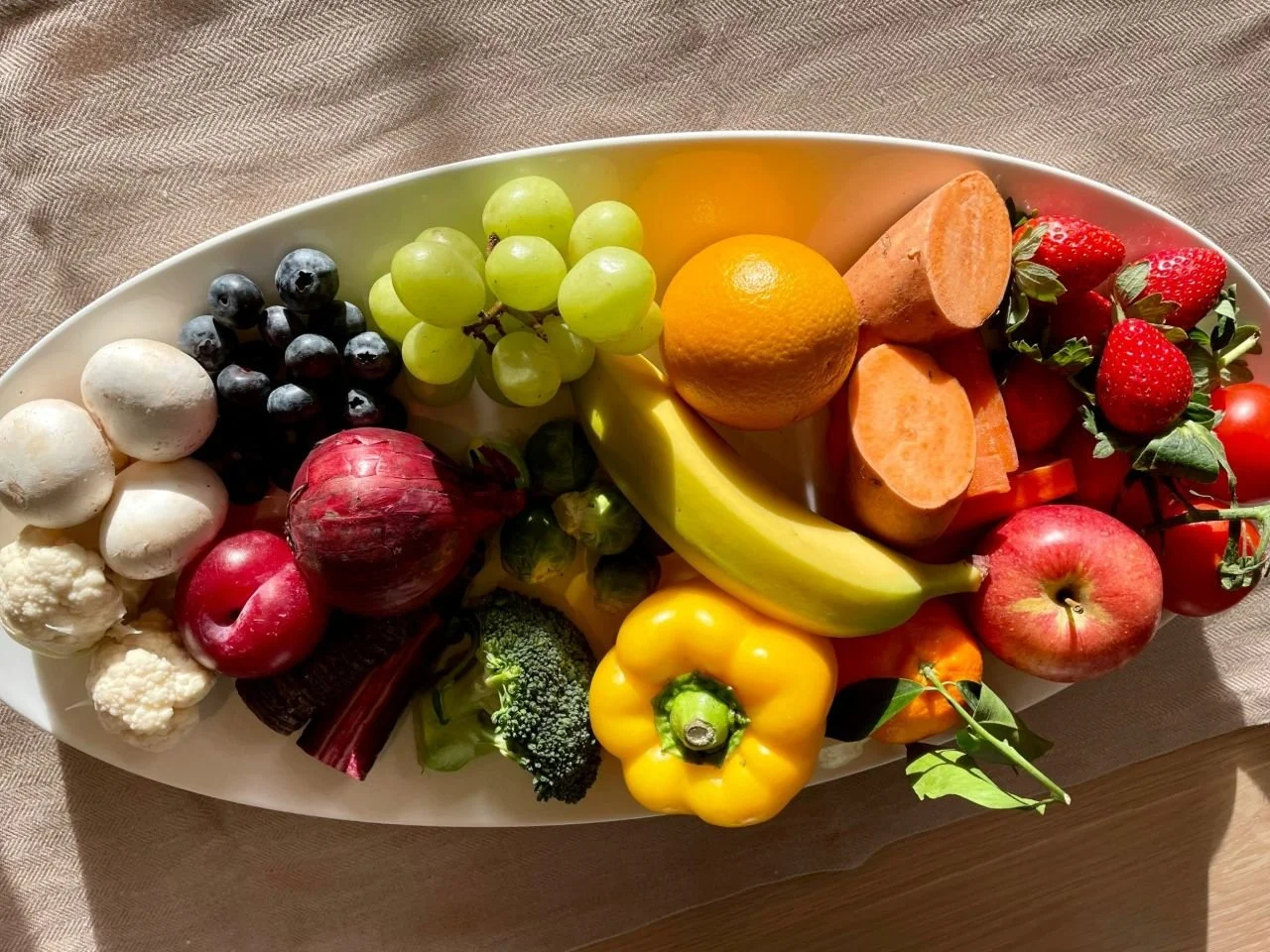
The reality of where most of us are starting from
Before we get into it, can we just acknowledge how hard it actually is? You’re navigating a food environment saturated with conflicting headlines, products dressed up as healthy with clever packaging and government guidance that often feels like it was designed for someone else’s life. You’re tired. You're possibly not sleeping well and the last thing you need is someone telling you that the one thing you thought you were doing right is barely scratching the surface. Sigh…!
I totally get it. So, what I want to offer here today isn’t more confusion or another impossible standard but some clarity. Because once you understand what’s actually going on, and you try out my practical solutions, the path forward becomes a lot more obvious.
A story about vegetables and being “weird”
A few years ago, my daughter had to write down everything she’d eaten over the weekend for a food tech lesson. Her friend read it, looked up and said:
“That can’t be right. That's just weird. No one eats that many vegetables”
Her friend was partly right. Not about the weird part (my daughter is a nutritionist’s child after all!), but the observation that very few people actually eat that many vegetables was spot on. That really resonated, because it captured the fact that eating plenty of plants has become ‘strange’, when in fact, it should be completely and utterly unremarkable. It's normalcy that we need to rebuild here, not just awareness.
Where 5 A Day actually comes from
The 5 A Day campaign launched in the UK in 2003, but its roots go back to World Health Organisation (WHO) guidelines from the 1990s, which recommended a minimum of 400g of fruit and vegetables per day to address micronutrient deficiencies globally. That figure, 400g, was always framed as a floor. A bare minimum. The very least we should be doing, not the aspiration.
The UK translated this into 5 portions of roughly 80g each and then something went wrong. The minimum became the message and the food industry was quick to capitalise on it, turning the campaign into a labelling exercise. Suddenly, 14 grapes counted. A microwave meal could carry the logo. A can of spaghetti hoops, hilariously, was offering you “1 of your 5 A Day” from behind a Peppa Pig illustration.. I am not making that up!
When Peppa Pig becomes your nutrition ambassador, we have a HUGE problem…
The guidance elsewhere tells a different story. Canada promotes 7 to 10 servings a day. The American Heart Association recommends around 9 cups of fruit and vegetables daily. Japan’s approach focuses heavily on dietary diversity, encouraging a wide variety of plant foods rather than fixating on a single number. Other countries took the WHO baseline and built on it, but the UK seems to have largely stopped there.
Yet, even that modest 5 A Day target is now being missed by the majority of us. Adults aged 19 to 64 are averaging just 3.3 portions per day, with intakes having fallen since 2019, a decline that researchers link to a combination of the cost-of-living crisis and reduced availability during the Covid-19 pandemic. Among 11 to 18 year olds, only 1 in 10 meets the 5 A Day target, the lowest of any age group, just when they are at a critical phase of growth.[3]
So most of us are not hitting the floor and the worrying part is that the floor was never the target to begin with.
So how much do we actually need?
A large study from Imperial College London, covering over 2 million people, looked at what happens to disease risk as fruit and vegetable intake increases [1]. The findings were pretty striking. Compared to eating no fruit or veg, eating 10 portions a day (around 800g) was associated with:
A 24% reduced risk of heart disease
A 33% reduced risk of stroke
A 28% reduced risk of cardiovascular disease
A 13% reduced risk of total cancer
A 31% reduction in premature death
There is NO pharmaceutical drug on the market with that kind of track record and the researchers noted that the benefits appeared to continue increasing towards 10 portions; the data simply stopped there. Nobody knows what's at 11 or 12 because the study didn’t go that far, but the trajectory is clear, more is certainly better… and it appears to compound. Broken down so simply, it’s a pretty compelling argument for having that extra serving of broccoli or swapping out the afternoon chocolate biscuits for some fruit!
This is mainstream epidemiology, published in the European Heart Journal, suggesting very clearly that the number most of us aim for is roughly half of what would produce a meaningful health benefit. Let’s just consider that for a moment....
But it's not just about quantity of veg… diversity is key
This is where it gets more interesting and where I think the 5 A Day conversation has always fallen short.
It’s not only how much you eat, it's also how varied it is.
The American Gut Project analysed the gut microbiomes of over 10,000 people across the UK, US and Australia and found that those eating 30+ different types of plant foods per week had significantly higher microbial diversity than those eating 10 or fewer. In fact, the diversity of plants in the diet appeared to have a greater impact on the gut microbiome than more general dietary patterns, including whether someone ate meat or followed a plant-based diet.[2]
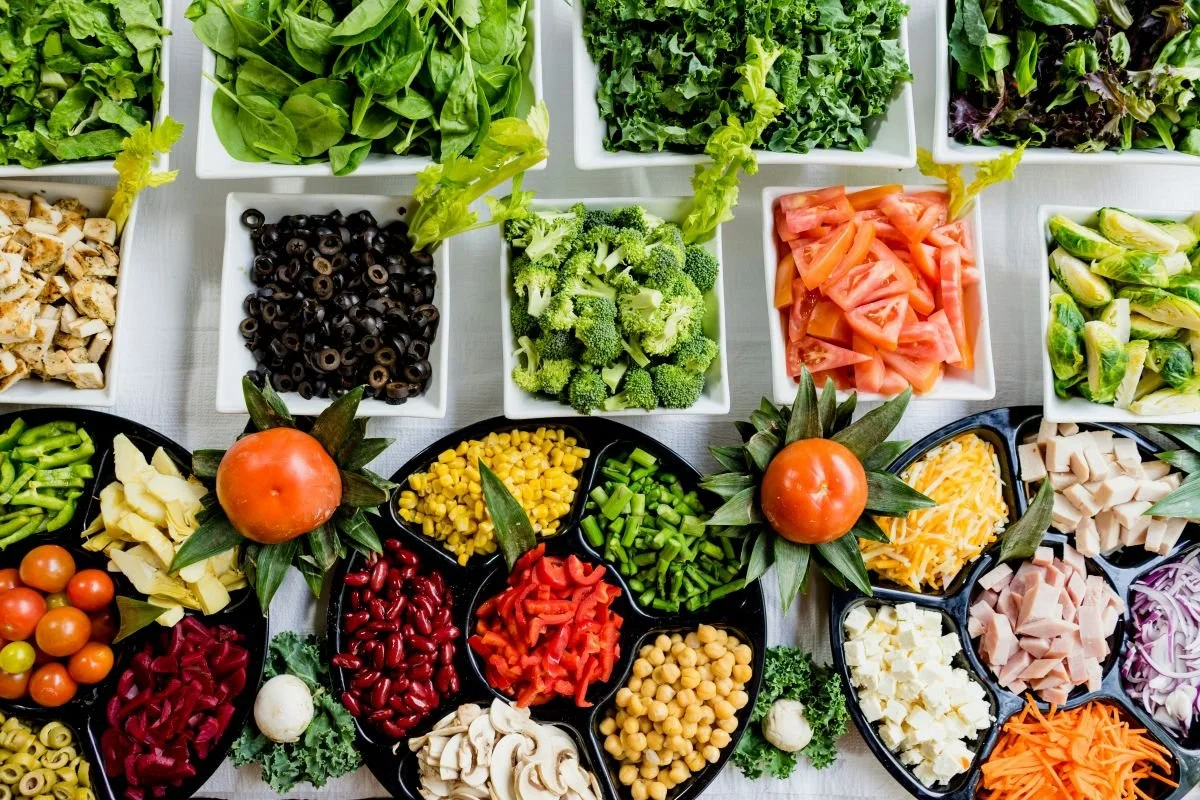
Why should we even care about microbiome diversity?
Because your gut microbiome is not a silent passenger in your health. It is intimately involved in regulating your immune system, producing compounds that influence inflammation and training your immune cells to respond appropriately rather than overreacting. A diverse microbiome, fed by a diverse diet, is better equipped to do all of that and a depleted one, fed on a rotation of the same 5 vegetables week in, week out, is, quite simply, not.
The study also found that people eating 30+ plant types per week had higher levels of certain beneficial bacteria, including Faecalibacterium prausnitzii and higher levels of compounds like conjugated linoleic acid (CLA), thought to play beneficial roles in health. These bacteria produce short-chain fatty acids, which are critical for gut barrier integrity and immune regulation.[2]
If you're navigating chronic fatigue, persistent inflammation or an immune system that feels like it’s constantly running on the wrong settings, this is exactly where food can start to pull its weight. Think of it as the fundamental layer that makes everything else work better, not just as a replacement for other interventions…food first…always.
The good news is that while 30 plants a week may sound alarming, it genuinely isn’t. It includes grains, herbs, spices, nuts and seeds, as well as fruit and vegetables. A handful of mixed seeds on your porridge is several. Some freshly chopped coriander on your soup counts. The diversity goal is achievable with a bit of intention, it just requires you to think differently about your plate.
What actually counts as a portion?
For those who want the practical detail, one portion is 80g, or roughly a handful. Almost all fruits and vegetables count, including frozen and canned (opt for those in water or natural juice, though please, rather than syrups). Pulses like lentils, beans and chickpeas count as one portion regardless of how many you eat, due to their lower overall micronutrient density compared to vegetables. Potatoes, unfortunately, don't count at all, although sweet potatoes do.
A few things worth noting…
Fruit juice can count as one portion maximum, regardless of how much you drink, but I’d encourage you not to lean on it. Juicing removes the fibre that slows sugar absorption, which matters greatly if you're managing energy, blood sugar or inflammation. A whole piece of fruit, or a greens-heavy smoothie, will always serve you better than a simple glass of fruit juice.
In practical terms aim for a 3:1 ratio of vegetables to fruit where you can and prioritise variety over perfection. Three portions at breakfast (a smoothie with spinach, banana and frozen berries, alongside some eggs with mushrooms and tomatoes, for example) gets you well on your way before you've even left the house in the morning.
What form is best?
Whole, fresh, local and seasonal produce will give you the highest concentrations of vitamins, minerals and the antioxidants that help reduce oxidative stress and protect your cells from damage. That said, frozen vegetables are nutritionally excellent, often frozen within hours of harvest and can be far more practical for people most of the time. Don’t let perfect be the enemy of very good!
How you cook them matters too. Boiling vegetables leaches water-soluble vitamins, particularly vitamin C and the B vitamins, into the cooking water. Steaming, roasting or light sautéing preserves significantly more. Where you can, include some raw foods alongside your cooked ones too.
Also, just to be clear, packaged food carrying a “1 of your 5 A Day” label is not equivalent to a serving of fresh vegetables, nutritionally or immunologically … or ever. The processing that makes food shelf-stable also degrades the compounds that make plants worth eating. Whole food in its most simple form is the foundation to build from.
Simple ways to close the gap
If moving from 3.3 portions to 10 sounds impossible, start where you are and add one more. That's it. Just one more portion today than yesterday and maybe, once you’ve got that extra one locked in, add one more…
10 portions of fruit & veg looks like this:
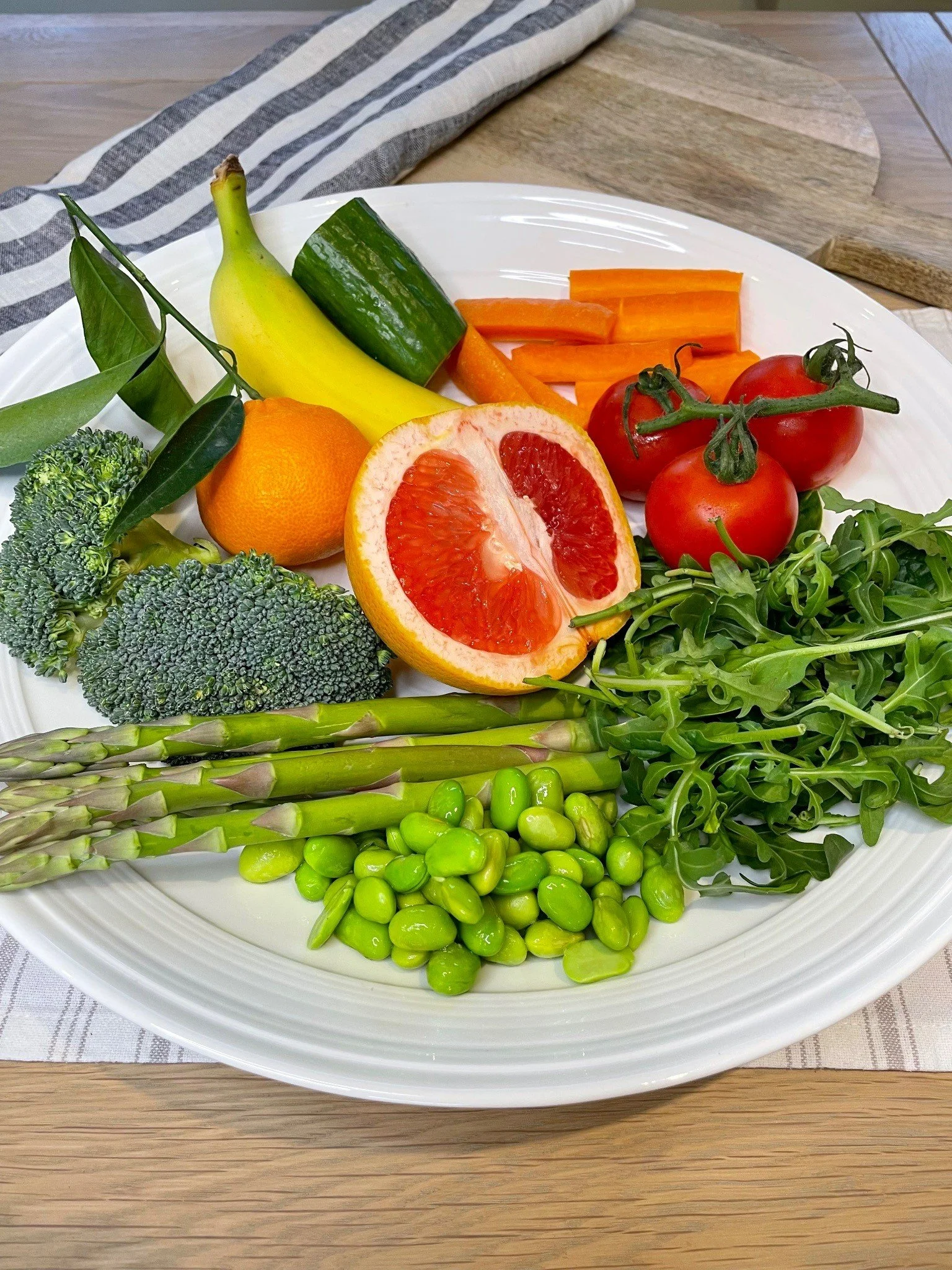
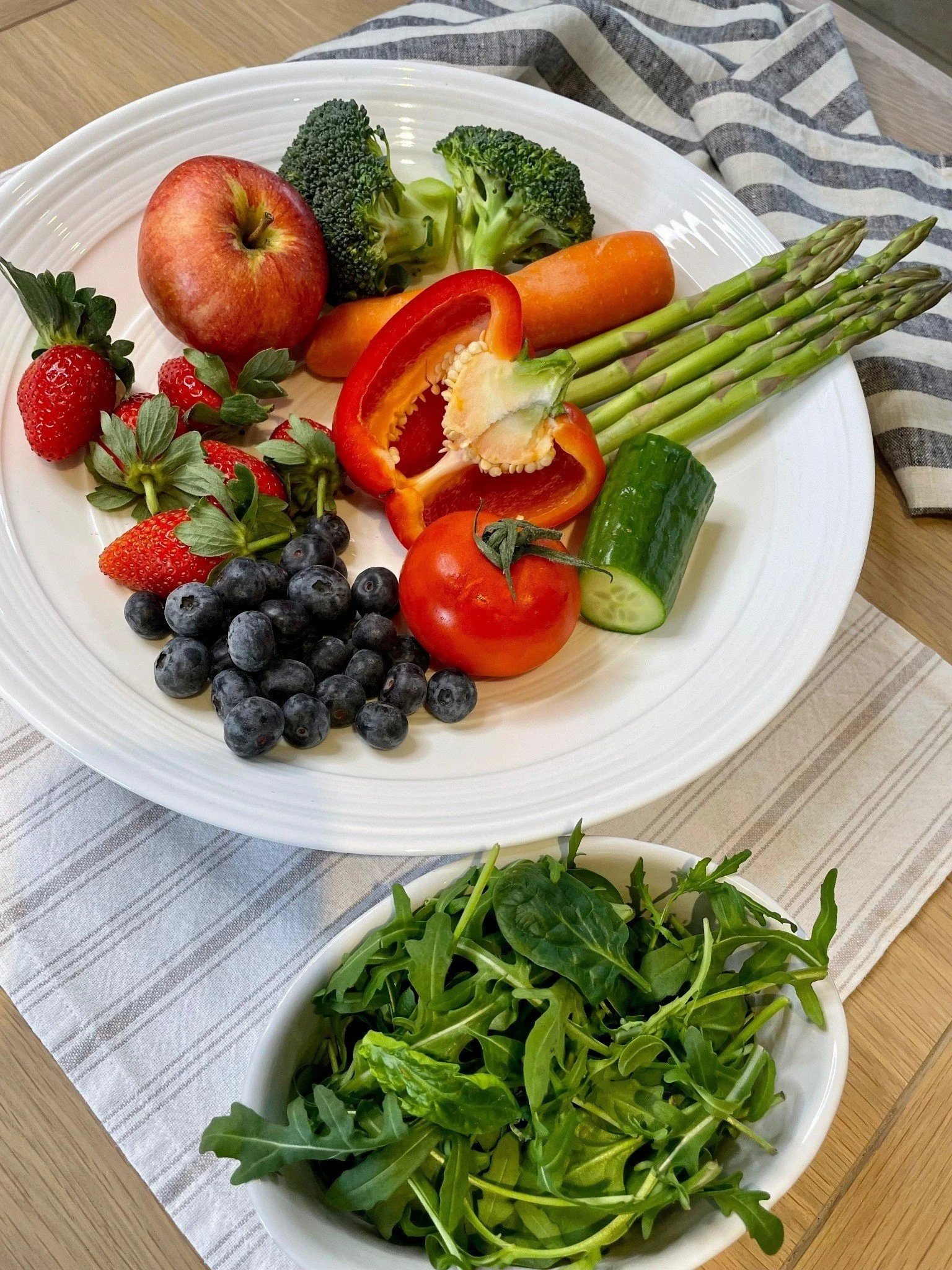
My top 10 tips to get more fruit & veg into your diet
1. Colourful plate principle: Aim for half your plate full of a variety of colourful veg - different colours indicate various beneficial phytonutrients and vitamins. Think of your meat or fish as the side dish to the vegetable stars of the show.
2. Smoothie power: Blend your favourite fruits and leafy greens into delicious smoothies. This convenient option is an easy way to consume multiple servings of fruits and vegetables in one go.
3. Snack smartly: Keep cut-up fruits and veggies readily available for quick, healthy snacks, for example, carrot & celery sticks with hummus. Keep a fruit bowl on your kitchen table to encourage healthier choices. Try kale chips or cauliflower ‘pop corn’ instead of crisps.
4. Vegetable-based sauces: Substitute traditional pasta sauces with veggie-packed alternatives. For example, try making a rich tomato sauce with added peppers, mushrooms, carrots, beans and spinach.
5. Salad variety: Experiment with salads by incorporating diverse ingredients like nuts, seeds and fruits (grapes and berries work brilliantly in salads) and different types of greens. This ensures a nutrient-packed and satisfying meal.
6. Roasting magic: Spend an hour at the weekend roasting a big tray filled with a variety of vegetables, drizzle with extra virgin olive oil and your favourite seasonings - keep in a container in the fridge ready for use throughout the week. Roasting enhances flavours, making veggies more appealing and it's a great way to meal prep for the week.
7. Vegetable-filled breakfast: Start your day on the right note by adding vegetables to your morning omelette or scrambled eggs - try some of those ready-roasted ones you prepped ahead, add mushrooms, peppers and spinach. It's a tasty way to sneak in extra nutrients and kickstart your metabolism too.
8. Frozen fruits and veggies: Don’t be afraid to rely on the convenience of frozen fruits and vegetables to help you up your game. Keep your freezer stocked with frozen fruits and vegetables. They're convenient, stay fresher for longer and can be easily added to smoothies, stir-fries, stews or as a side dish (frozen spinach cubes are a particular favourite of mine).
9. Swap out starches: Try courgette or butternut squash spiralised into noodles instead of spaghetti. Use lettuce leaves as taco wraps, or smaller little gem leaves as ‘boats’ for tasty taco fillings. Try cauliflower ‘rice’.
10: Potato alternatives: While potatoes can form part of a balanced diet due to their fibre (with skin on), potassium and B vitamin content, sadly, they don’t count towards your veg portions. Try swapping these for some beta-carotene-rich sweet potato wedges, roast squash or parsnips instead.
Think about diversity as a game rather than a target. Keep a rough weekly tally of different plant types (a sticky note on the fridge works well). You'll quickly notice where your rotation has become repetitive and where there's room to expand.
Finally, if you're relying on processed food packaging to get you there, read those labels VERY carefully. The 5 A Day branding is a marketing device that has been capitalised on by the commercial food industry. It is not a nutritional guarantee and it comes a very poor second to real, whole food.
In summary, if you've skipped to the end
5 A Day was always intended as a minimum threshold, not a health target. It was designed to address micronutrient deficiency globally, not to optimise the health of people in the UK dealing with fatigue, chronic symptoms or immune dysfunction.
The evidence points to 10 portions as the level at which meaningful reductions in disease risk are seen. Diversity of plant foods, targeting around 30+ different types per week, may matter as much as (if not more than) quantity, through their effect on the richness of the gut microbiome and the downstream impact on immune regulation and inflammation. If you’d like to understand what else your immune system is asking for beyond the plate, this piece is worth a read.
Most UK adults are currently averaging just 3.3 portions a day and intake is falling, not rising. There is, in other words, significant room for most of us to make changes that are genuinely meaningful for long-term health.
The practical steps: prioritise variety over perfection; make vegetables the centrepiece rather than the side dish; use whole and frozen foods liberally; cook in ways that preserve nutrients; and treat any packaged food claiming ‘5 A Day’ credentials with a healthy degree of scepticism.
Real food should always be the foundation that everything else is built on top of and the more of it the better.
—
If reading this has made you curious about how food is actually working inside your body, not just in theory, but in real time, this is exactly what we explore in my Sugar Shift programme. Over 4 weeks, you’ll work with the latest tech, watching how food impacts your blood sugar. The response you’ll see to a plate built around plants compared to one without them is the kind of lightbulb moment that moves people from “I know I should eat more veg”… to “I can see, in my own data, exactly why!” The next group starts in September 2026 and spaces are limited. Read more about it below or get in contact for more details.
If you’re dealing with persistent fatigue, immune issues or chronic symptoms and you're wondering how much of it comes down to what’s on your plate, I’d love to talk. This is exactly the kind of conversation I have with people every week and it usually opens up far more possibilities than they’d expected.
If this resonated, please share it with a friend who might need to read it.
References
1. Aune, D. et al. (2017) ‘Fruit and vegetable intake and the risk of cardiovascular disease, total cancer and all-cause mortality: a systematic review and dose-response meta-analysis of prospective studies’, International Journal of Epidemiology
2. McDonald, D. et al. (2018) ‘American Gut: an open platform for citizen science microbiome research’, Cell Host and Microbe.
3. National Diet and Nutrition Survey (NDNS) 2019–2023. Public Health England / UKHSA. Available at: https://www.gov.uk/government/collections/national-diet-and-nutrition-survey