
Why ‘boost your immunity’ is the wrong frame and what to reach for instead
If your winter plan is currently a box of Lemsip, a hot water bottle and hoping for the best, no judgement here. There is, however, an interesting middle ground between throwing the entire contents of the supplement aisle at your immune system and doing nothing until you are flat out on the sofa.
In this article I’ll walk you through the top five things I keep in my own medicine cabinet this time of year. Why they are there, when I reach for each one and what the evidence actually says. By the end you will have a shortlist worth stocking up on before the first cough appears and a clearer sense of why ‘boosting’ your immunity is the wrong frame in the first place.

Why your body does not need boosting
If you have found yourself at 10pm with a scratchy throat, poking through a dusty box of effervescent vitamin C and wondering whether it is actually going to do anything, you are in good company. Many of my clients arrive having tried most of what the high street has to offer. Colds still appear, often staying longer and feeling worse than they used to, frequently alongside a flare of whatever else they are managing. The supplement aisle is overwhelming, the headlines contradict each other, many products are entirely useless and the standard advice has not moved much in twenty years or more.
I take a slightly different view. I am less interested in turning the volume up on an already busy immune system and much more interested in supporting the body’s own defence and regulation machinery. Some of what follows works locally at the mouth and throat, some interacts with immune signalling, some has direct antiviral activity and some has the added bonus of making the whole miserable business feel a bit less miserable.
None of it is a substitute for the foundations: enough sleep, steady blood sugar, decent vitamin D, omega-3 (in the right ratio), appropriate movement and a varied plant-rich diet. Those are the posts I will cross-link at the end, because they will make far more difference than anything in a bottle.
1. Zinc lozenges: my ‘I've just felt that first tickle’ remedy
Zinc is probably the least glamorous thing in my cabinet. But it also has some of the better evidence behind it. Oral zinc lozenges, specifically zinc acetate or zinc gluconate, started within the first 24 hours of symptoms, may reduce the duration of a cold by almost 40% [1].
The mechanism is the clever part. Lozenges release ionic zinc directly into the throat tissue, where it interferes with how common cold viruses attach to the cells lining our airways. This is why a lozenge dissolved slowly in the mouth beats the same dose swallowed in a tablet. It is also why I bother keeping a tub within easy reach at all times!
So when I feel that first little tickle in my throat and think ‘oh no, here we go’, that is when I reach for the zinc.
One caveat. High-dose or prolonged zinc can cause nausea and disrupt copper status (zinc and copper compete for the same transporters), so this is not a forever daily habit. A few days at the first sign of symptoms is the whole point.
Interesting factoid: zinc was only confirmed as essential to human health in 1961, remarkably recent for a mineral we now know regulates several hundred enzymes in the body. 💡
2. Elderberry: not just something your granny put in cordial
Elderberry has been used for respiratory complaints for about as long as anyone has been writing about medicine. Pliny the Elder wrote about elder in his Natural History in the first century. Hildegard of Bingen was prescribing it in the twelfth century. European folk tradition held the elder tree in such reverence that cutting one down (or even lopping its branches) without first asking permission from the ‘Elder Mother’ who lived within it was considered deeply bad luck. A fascinating story and recognition of how long humans have known this plant has important roles to play in health and wellbeing.
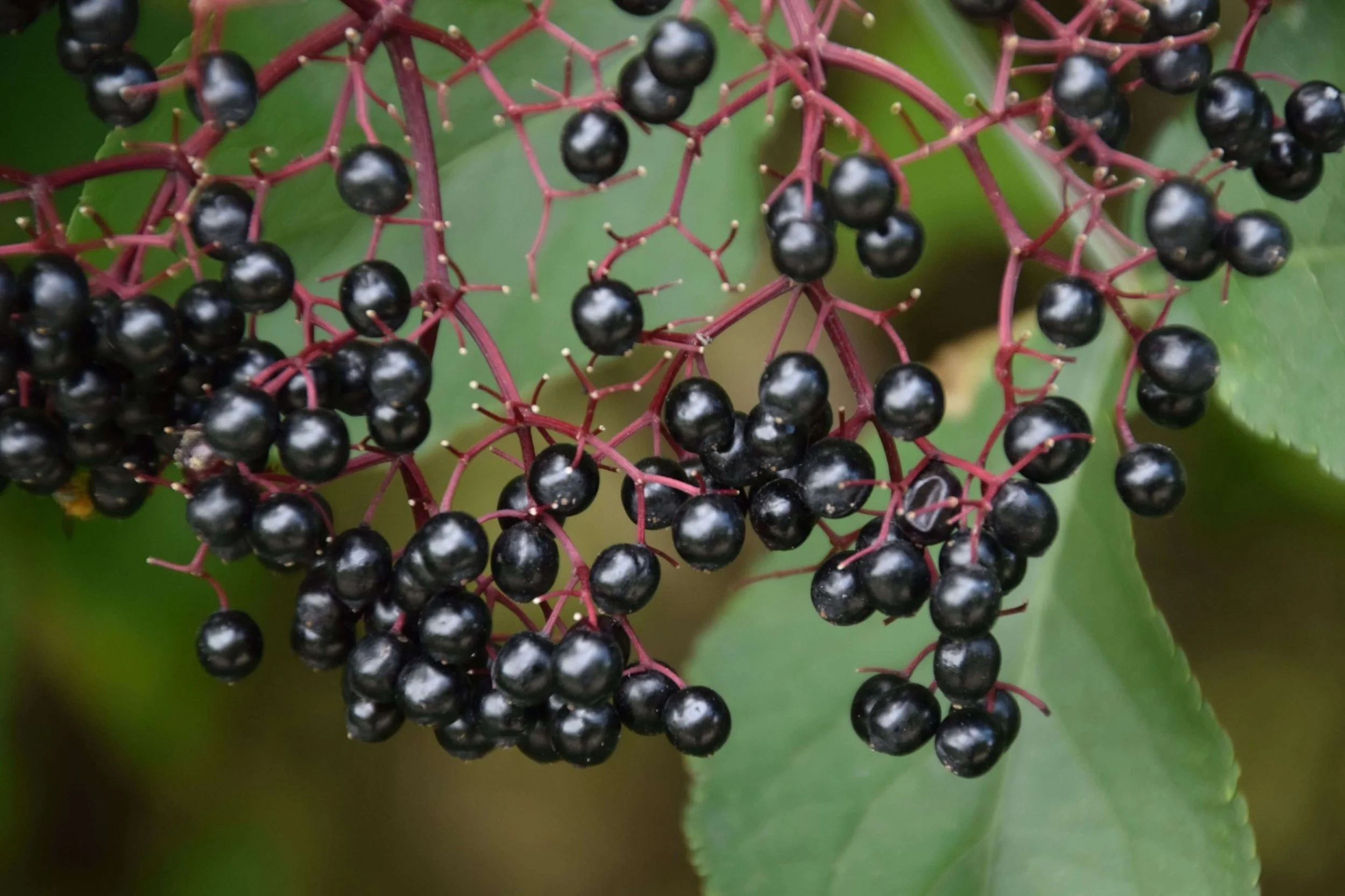
The modern evidence is also pretty respectable. The flavonoids in black elderberry bind to the haemagglutinin proteins on influenza viruses and interfere with how they attach to our cells. A 2019 meta-analysis found elderberry supplementation reduced the duration and severity of upper respiratory symptoms [2].
I particularly like elderberry because it fits well with the way I like to think about plants being available to us as we need them. You will often see elderberries glistening like dark jewels on the hedgerows in autumn, right as ‘cold season’ approaches. You can find these as elderberry syrups and glycerites or in capsule form. If you have a patch of elder near you and a free Saturday, a homemade syrup is a lovely project and you can tuck it into the freezer in small portions.
3. Chinese skullcap: the slightly more niche one
This is probably the one in my cupboard that makes people say, ‘you’ve got whaaat?’ Scutellaria baicalensis, known in Traditional Chinese Medicine as huang qin, has been in use for well over two thousand years. It appears in the Shennong Ben Cao Jing, one of the earliest Chinese pharmacopoeias. ‘Golden root’ is one translation of its name, which is both poetic and very apt once you see the colour of the rhizome.
The mechanism, however, is far more than folklore alone. The herb contains a family of polyphenols called baicalin, baicalein, wogonin and oroxylin A. Baicalin in particular inhibits NF-κB signalling, one of the central inflammatory switches in the body and, inconveniently for us, one of the pathways viruses often hijack to drive their own replication [3]. It also encourages the production of immune cells (our T-reg cells which are critical in autoimmunity) that keep responses in check rather than letting them escalate. Direct antiviral activity has been shown across a range of viruses including influenza and coronaviruses [4].
What I like about skullcap is that it works to balance the immune system rather than to simply shout at it. That same nuance is why I would use it thoughtfully; ideally with practitioner input if you are on medications or have an autoimmune condition. Used appropriately though, it is an impressive herb and can be used in capsule or tincture form, and like many herbs should not be used long term, but just when needed.
4. Lactoferrin: the immune defence molecule most people haven’t heard of
Lactoferrin is a wonderfully nerdy immune support protein that doesn’t get nearly as much airtime as vitamin C and probably deserves a lot more. It is a protein your body makes naturally, found in saliva, tears and mucous membranes and in particularly high concentrations in the colostrum of mothers’ milk. One researcher described it as the ‘Swiss army knife of the human host defence system’, which gives you a sense of its range of abilities.
The beauty of lactoferrin is that it works at several points of immune defence at once. It binds iron, which denies opportunistic microbes a nutrient they need to grow. It can physically block viruses from attaching to the cells lining our airways. It helps balance rather than bluntly stimulate the immune response, which is exactly the approach I like to take throughout my clinical work.
A 2023 randomised controlled trial in 157 healthy adults found that 200mg of bovine lactoferrin daily for 12 weeks significantly reduced respiratory and systemic symptom scores compared with placebo [5]. A 2021 meta-analysis of randomised controlled trials associated lactoferrin supplementation with a lower risk of respiratory tract infections overall [6], and it also has some compelling research supporting its use in Covid-19.
One caveat. Bovine lactoferrin is derived from milk, so it is not suitable for anyone with a dairy protein allergy. I particularly like the new Leapfrog immune range (no affiliation); a rare find of lactoferrin in a chewable tablet, together with zinc and vitamin C.
5. Manuka honey or green tea gargle: go straight to the throat
Sometimes the most obvious place to start is where the symptoms are actually happening. If my throat is beginning to feel scratchy, I reach for manuka honey or make a strong cup of green tea and use it as a gargle.

Manuka has a long history as a traditional remedy. The Māori of Aotearoa have used manuka for centuries, from wound dressings to fever remedies. Captain Cook’s crew brewed its leaves as a tea in 1769, which is how the ‘tea tree’ name arrived in the English language. The antibacterial properties come from its low pH, hydrogen peroxide and enzyme content, as well as particularly high levels of methylglyoxal. The key with manuka is buying the real thing! Easier said than done at times. Look for products certified by the New Zealand government carrying a UMF (Unique Manuka Factor) or MGO (Methylglyoxal) rating. Higher numbers mean greater potency. Reputable brands include Steens, Comvita and a recent find, Manukora, that has a rather lovely QR tracker on each jar documenting the complete journey of the individual batch and beekeeper.
If you’re using manuka honey in a tea, together with lemon and fresh ginger root (one of my favourites!), just make sure that the water is not boiling, but just body temperature as you add the honey. Otherwise you will destroy a lot of the wonderful bioactives that the bees worked so hard to provide.
Green tea is simple, accessible and does more than most people realise. The catechins have antimicrobial and antiviral activity and there is some emerging research on green tea catechin gargling and upper respiratory infections.
However, the cheapest option of all may be the best. A 2019 randomised controlled trial found that gargling and nasal rinsing with hypertonic salt water reduced the duration of upper respiratory infections by 1.9 days, with a follow-up study on coronavirus infections showing a reduction of 2.5 days [7,8]. Yes, you read that correctly, that is salt, and sterilised water, beating most things in a bottle costing a lot more!
Honey and green tea are lovely for the warming, soothing quality they bring with them. But do not discount a simple saline rinse, especially when the kids are generously sharing coughs around the kitchen table.
Interesting factoid: the ancient Egyptians recorded honey as a wound dressing in the Edwin Smith Papyrus around 1600 BC and Greek medicine of a similar era recommended gargling with salt water. When we really break it down, not much is new and these plants and compounds have been around and serving us for millennia!
One more that I couldn’t leave out: propolis throat spray
I couldn’t write this piece without a nod to propolis throat spray, which keeps earning its place on my shelf alongside the five above. Propolis is the resinous mixture bees collect from tree buds and sap and use to sanitise and seal their hive, which gives you a sense of how biologically busy this stuff is.
Poplar-type propolis is rich in flavonoids and phenolic acids (galangin, chrysin, pinocembrin, apigenin and quercetin among them) along with caffeic acid phenethyl ester, known as ‘CAPE’, all with well-documented antibacterial, antiviral and anti-inflammatory activity. At the throat it works through several mechanisms at once. It directly inhibits the growth of bacteria most often implicated in throat infections, including Streptococcus pyogenes and Staphylococcus aureus. Its flavonoids interfere with viral replication across a range of respiratory viruses including rhinoviruses, adenoviruses and influenza too. CAPE is a well-studied inhibitor of NF-κB, the same inflammatory switch I mentioned under skullcap above, which calms the local tissue response rather than shouting at it.
In a 2021 randomised, double-blind, placebo-controlled trial in 122 adults with mild upper respiratory infections, they found that 83% of those using a standardised poplar-type propolis oral spray had full remission of symptoms after just three days, while 72% of the placebo group still had at least one remaining symptom at that point, and took on average another two days for full recovery - a great result for another humble bee product! [9].
One note of caution: propolis can trigger reactions in anyone allergic to bees, bee stings or other bee products, so give it a miss if that applies to you.
Side note… None of this works without the foundations
My natural medicine cupboard still has plenty of science within it, but goes a little further than the standard Lemsip and vitamin C. None of it replaces the foundational work either… sufficient nutrient levels (A,D,E,C,B vits, zinc, magnesium etc.) omega-3 (in a decent ratio), steady blood sugar, enough sleep, a plant-rich diet, appropriate movement and a nervous system that isn’t constantly stuck in high alert. If those aren’t in place, sadly no supplement is going to carry you through winter on its own.
If you want to shore those up first, these pieces are a good starting point:
Key takeaways
For those of you who have scrolled to the bottom, here is the summary.
Zinc acetate or gluconate lozenges, started within 24 hours of the first tickle, may shorten a cold. Short-term use only and monitor copper levels.
Elderberry has impressive folklore credentials and a reasonable modern evidence base, particularly for flu-like symptoms.
Chinese skullcap is a more specialist herb with immunomodulating and antiviral activity. Best used with practitioner input if you have an autoimmune condition or take medications.
Lactoferrin is a multi-tasking defence protein with growing evidence behind it for respiratory infections. Not suitable if you have a dairy protein allergy.
A manuka honey, green tea or saline gargle gets you straight to where the symptoms are starting. The humblest of the five, plain saline, has arguably the most impressive numbers of all.
Propolis throat spray is a well-evidenced local defence worth adding to the shelf, unless you are allergic to bee products.
The takeaway is simple. Understand what your immune system is actually trying to do and choose things that support that process…and ideally, have them in the cupboard before you’re standing in the kitchen at 10pm wondering where you can still get elderberry at this hour. You can find some of the above mentioned products in my curated supplement collection.
Want help putting the foundations in place?
If each winter you are consistently run down, flaring or recovering slowly, this is often about more than what is in your medicine cabinet. My Get Empowered programme is designed to work on the whole picture: immune regulation, gut and barrier health, inflammation, blood sugar, stress and the foundations that make everything else work harder.
Click here to book in for a chat and let’s figure out what’s going on underneath.
References
Hemilä, H. (2017) ‘Zinc lozenges and the common cold: a meta-analysis comparing zinc acetate and zinc gluconate, and the role of zinc dosage’, JRSM Open
Hawkins, J. et al. (2019) ‘Black elderberry (Sambucus nigra) supplementation effectively treats upper respiratory symptoms: a meta-analysis of randomized, controlled clinical trials’, Complementary Therapies in Medicine
Zhao, Q., Chen, X.-Y. and Martin, C. (2016) ‘Scutellaria baicalensis, the golden herb from the garden of Chinese medicinal plants’, Science Bulletin
Zandi, K. et al. (2021) ‘Baicalein and baicalin inhibit SARS-CoV-2 RNA-dependent-RNA polymerase’, Microorganisms
Oda, H. et al. (2023) ‘Effects of bovine lactoferrin on the maintenance of respiratory and systemic physical conditions in healthy adults: a randomized, double-blind, placebo-controlled trial’, Nutrients
Ali, A.S. et al. (2021) ‘Lactoferrin reduces the risk of respiratory tract infections: a meta-analysis of randomized controlled trials’, Clinical Nutrition ESPEN
Ramalingam, S. et al. (2019) ‘A pilot, open labelled, randomised controlled trial of hypertonic saline nasal irrigation and gargling for the common cold’, Scientific Reports
Ramalingam, S. et al. (2020) ‘Hypertonic saline nasal irrigation and gargling should be considered as a treatment option for COVID-19’, Journal of Global Health